Insurance
Final Expense Insurance: What It Costs at 60, 70 and 80 — and When It's Worth It
A $10,000 burial policy can cost $33 a month at 60 or $164 at 80, and whether it beats a savings account depends on which of those you are.
 Margaret Linwood
Updated Sep 22, 2026 · 11 min read
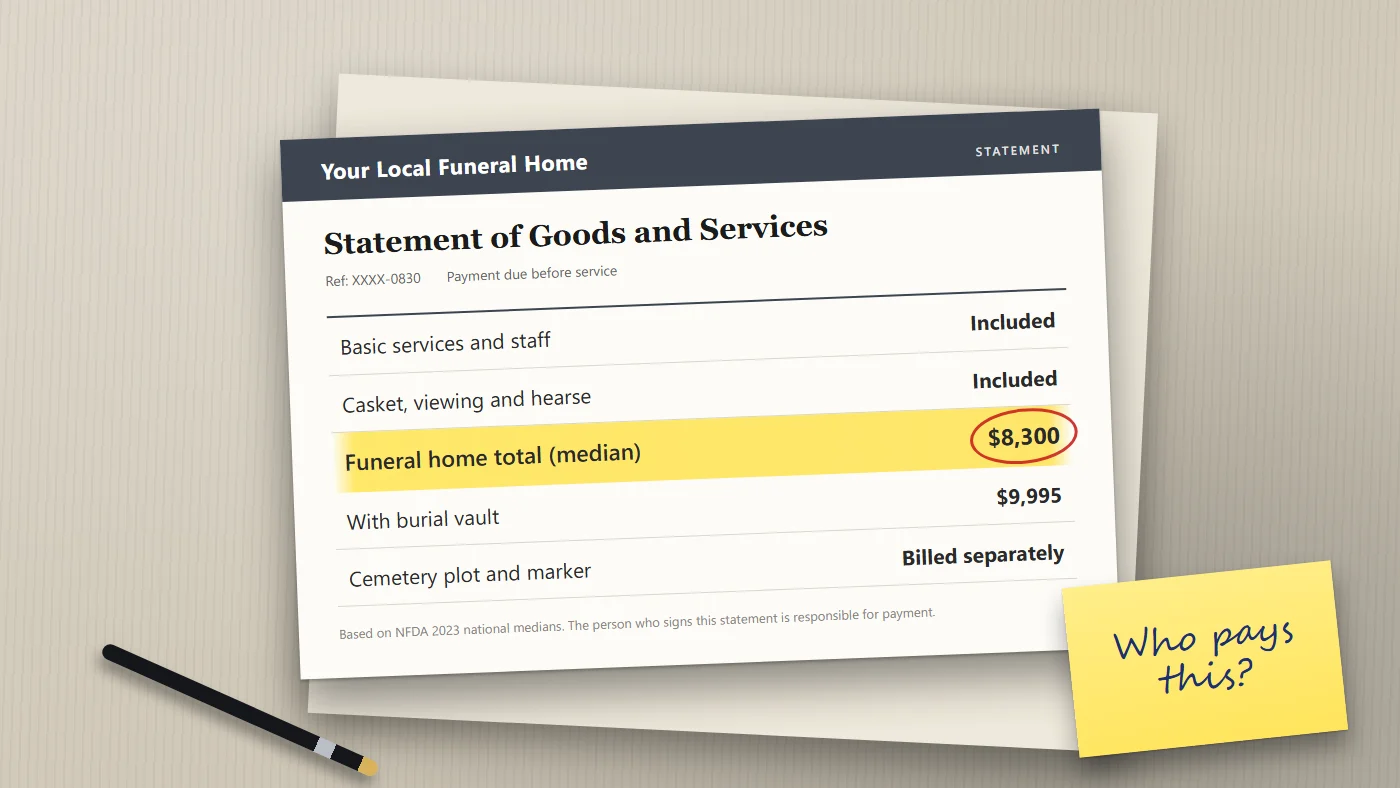
A funeral with a viewing and burial had a median price of $8,300 in the National Funeral Directors Association's 2023 price study, the latest it has released. That covers only the funeral home's side of things: the basic services fee, embalming, a metal casket, the viewing and the hearse. Add a burial vault, which many cemeteries require, and the median climbs to $9,995. Three years of inflation later, you should expect local prices to be higher.
None of that includes the cemetery. The plot, the fee to open and close the grave, the headstone, flowers and the obituary are billed separately and can add thousands. A funeral with a viewing followed by cremation had a median of $6,280.
Someone has to agree to pay within days of a death, usually before an estate is opened and often before any bank account is released. Many funeral homes ask for payment, or for a life insurance policy they can bill, before the service. And the person who signs the funeral home's contract is the person on the hook for it.
That's the problem final expense insurance is sold to solve. It's a small whole life policy, usually $5,000 to $25,000, with no medical exam, that pays your beneficiary fast so nobody has to put a funeral on a credit card. For some people it's a sensible buy. For others it's an expensive way to save $10,000. Your age, your health and what you already have decide which.
What happens when nothing is set aside?
A family member sits down with a funeral director, picks services and signs. If there's a life insurance policy, many funeral homes will take an assignment of part of the death benefit and wait for the insurer to pay them. If there isn't, the family pays by card, check or loan and tries to get reimbursed from the estate later.
Your estate is responsible for your funeral costs. But an estate can take months to open, gather assets and pay its bills, while the funeral home usually wants its money, or a policy it can bill, before the service is held. Social Security pays a one-time $255 death payment to a surviving spouse or eligible child, and it has to be claimed within two years. That amount hasn't changed since 1954, which tells you roughly how far it goes against an $8,300 bill.
When a family really can't pay, the options shrink quickly. Direct cremation with no service costs far less than a traditional funeral. Some counties and states run small burial assistance programs, with rules and amounts that vary a lot by location. Veterans may qualify for VA burial benefits. None of it is what most people would pick. That's where the insurance pitch comes in.
What a $10,000 policy costs by age
How much, then? Two 2026 rate surveys give a realistic range. The low end is the cheapest policy in a quote survey dated March 9, 2026, for non-tobacco users. The high end is the average across carriers in MoneyGeek's analysis for nonsmokers. Both are for policies with health questions and no waiting period.
| Age at purchase | Woman, $10,000 policy | Man, $10,000 policy |
|---|
| 50 | $24 to $30 a month | $31 to $38 a month |
| 60 | $33 to $42 a month | $43 to $53 a month |
| 70 | $53 to $64 a month | $70 to $84 a month |
| 80 | $98 to $125 a month | $135 to $164 a month |
| 85 | $136 to $155 a month | $178 to $203 a month |
The premium is locked for life once you buy, which sounds reassuring until you notice how fast the starting price climbs while you wait: in the carrier-average data, rates jump 44% for women and 45% for men between 75 and 80 alone.
Men pay roughly 30% more than women of the same age, since women live longer on average. Tobacco pushes the price higher still. Much higher. And these are prices for someone in reasonable health; a history of heart trouble, cancer or diabetes complications can bump you into a pricier kind of policy, covered below.
Now the math the brochures skip.
A 70-year-old woman paying $64 a month puts in $768 a year, so a little past the 13-year mark she's paid more than the $10,000 her family would get. An 80-year-old man at $164 a month crosses that line in just over five years.
That doesn't make the policy a bad deal. Insurance is for the years before you've saved the money. If she dies in year three, her family gets $10,000 after she paid about $2,300. But if you already have $10,000 you could set aside and leave alone, buying the policy is basically a bet that you'll die sooner than the insurer expects.
Which kind of policy you qualify for changes that math more than anything else, and it comes down to how you answer a short list of health questions.