Here's a date worth circling if a Medicare drug plan fills any of your prescriptions: January 1, 2027. That morning, Medicare's price for 15 brand-name drugs drops, and for some of them it drops by more than half.
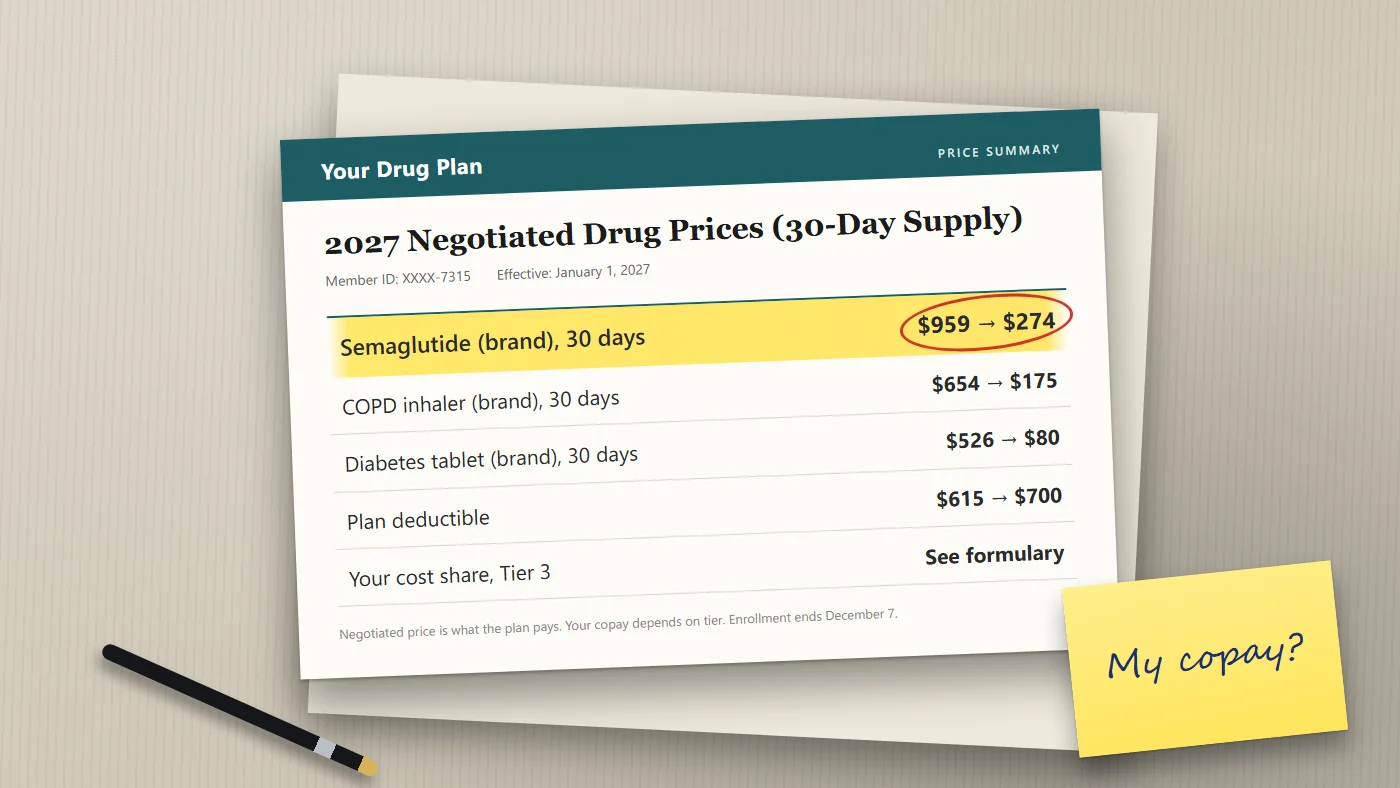
The one people ask about most is semaglutide. You know it as Ozempic, Rybelsus or Wegovy. In 2024 a month's supply listed at $959. Medicare's new price for that same month? $274.
These aren't estimates somebody floated. Medicare sat across the table from the drug makers and bargained, under powers Congress gave it in the Inflation Reduction Act, and the talks closed on November 1, 2025. The final prices went up later that month. Your plan doesn't get a vote, either. Every Part D plan, and every Medicare Advantage plan that covers drugs, has to carry all 15 in 2027.
Roughly 5.3 million people on Part D filled at least one of these drugs in 2024, by the count from the Centers for Medicare & Medicaid Services (CMS). If you're one of them, the obvious question is what happens at your pharmacy. Honest answer: it depends, and the piece that decides it isn't on Medicare's list. It's buried in your own plan's paperwork.
Think of it as two prices. There's what your plan pays for the drug, which is the number Medicare just negotiated. And there's what you pay, a copay or a percentage, which your plan picks on its own. Come January, some people will watch their monthly cost drop sharply. Others will hand over the same flat copay they paid in December.
The number to know: $959 down to $274, a 71% cut. That's a 30-day supply of Ozempic, Rybelsus or Wegovy, before and after negotiation. Across all 15 drugs, CMS expects people with Part D to save about $685 million out of pocket in 2027.
The full list: 15 drugs and their 2027 Medicare prices
Prices are for a 30-day supply. The list price column is the 2024 wholesale price CMS used as its starting point, and the last column shows how many Part D enrollees used each drug that year.
| Drug | Commonly used for | 2024 list price | 2027 Medicare price | Cut | Part D users, 2024 |
|---|
| Ozempic, Rybelsus, Wegovy | Type 2 diabetes; heart disease with obesity or overweight | $959 | $274 | 71% | 2,282,000 |
| Trelegy Ellipta | Asthma, COPD | $654 | $175 | 73% | 1,269,000 |
| Linzess | Chronic constipation, IBS-C | $539 | $136 | 75% | 632,000 |
| Breo Ellipta | Asthma, COPD | $397 | $67 | 83% | 626,000 |
| Tradjenta | Type 2 diabetes | $488 | $78 | 84% | 274,000 |
| Janumet, Janumet XR | Type 2 diabetes | $526 | $80 | 85% | 239,000 |
| Vraylar | Bipolar I, depression, schizophrenia | $1,376 | $770 | 44% | 118,000 |
| Xifaxan | IBS-D, hepatic encephalopathy | $2,696 | $1,000 | 63% | 105,000 |
| Xtandi | Prostate cancer | $13,480 | $7,004 | 48% | 35,000 |
| Otezla, Otezla XR | Psoriasis, psoriatic arthritis, Behçet's oral ulcers | $4,722 | $1,650 | 65% | 31,000 |
| Austedo, Austedo XR | Tardive dyskinesia, Huntington's chorea | $6,623 | $4,093 | 38% | 27,000 |
| Ofev | Idiopathic pulmonary fibrosis | $12,622 | $6,350 | 50% | 24,000 |
| Ibrance | Breast cancer | $15,741 | $7,871 | 50% | 16,000 |
| Calquence | Certain leukemias and lymphomas | $14,228 | $8,600 | 40% | 15,000 |
| Pomalyst | Multiple myeloma, Kaposi sarcoma | $21,744 | $8,650 | 60% | 14,000 |
This isn't small money. Part D spent about $42.5 billion on these 15 in 2024, close to 15% of everything it spent on drugs that year. People on Medicare paid $1.7 billion of that themselves. Now run the new prices back through 2024: after rebates, Medicare's bill would have come out roughly $12 billion lighter, by CMS's math.
Sound familiar? It's round two. The first ten negotiated drugs, Eliquis, Jardiance, Xarelto and Januvia among them, got their Medicare prices on January 1, 2026.
So will my copay actually go down?
Maybe. Your plan bills you for a drug in one of two ways. A copay is a flat amount, like $47 a fill. Coinsurance is a percentage of the drug's price, like 25%.
With coinsurance, a lower price flows straight through to you. Say your plan charges 25% on a brand-name drug. When the drug cost $959, your share came to about $240 a month. At $274, it's closer to $69. Real pharmacy prices don't always match list prices, so treat that as a sketch, but the direction holds.
A flat copay is another story. Your plan can keep charging you $47 in 2027 even though its own cost fell by hundreds of dollars. It could also cut the copay, raise it, or shuffle the drug to another tier. The law makes plans cover these 15 drugs. Where they sit on the tier ladder is left to the plan.
Then there's the deductible. Until you've cleared it, you pay the drug's full price at the counter, and on a standard plan that means the first $700 of 2027. This year it's $615. If you take Trelegy, "full price" used to mean several hundred dollars a month, and next year it means $175. Better, no question. The flip side: a $175 drug takes four months to work through a $700 deductible, unless your plan waives the deductible for that tier.
The specialty drugs are simpler. Xtandi, Ibrance, Calquence, Pomalyst, Ofev and Austedo still run somewhere between $4,000 and $8,700 a month after the cut. On a standard plan, that's enough to hit the 2027 out-of-pocket cap within the first month or two. The cap is $2,400, and past it you pay $0 for covered drugs. So the new price changes how fast you get there, not where you land.
One price cut, three very different outcomes. You won't know which one you've got until you look at your own plan's 2027 numbers, and you don't get long to do it.
Five steps to find your 2027 cost
Open enrollment runs October 15 through December 7, 2026, and any change you make takes effect January 1, 2027. Before you pick anything:
- Write down your drugs exactly. Name, strength, how often you fill. The negotiated price covers every dose and form of the 15 drugs, but plans price each strength separately.
- Find your Annual Notice of Change. Your plan has to get it to you by September 30. Go to the drug coverage section, which lists the 2027 deductible, the tiers and the copay or coinsurance for each tier.
- Look up your drug's 2027 tier. The notice points to the 2027 formulary, the plan's drug list. Note the tier and any letters next to your drug: PA means prior authorization, ST means step therapy, QL means a quantity limit.
- Run your list through Medicare Plan Finder. It's on Medicare.gov, with 2027 plans loaded in October. Enter your drugs and your pharmacy, and it estimates a full year's cost, premium plus drugs, for every plan in your area. Sort by that total, not by the premium.
- Call if the numbers don't add up. Medicare is at 1-800-633-4227. Your State Health Insurance Assistance Program (SHIP) gives free one-on-one help, and its counselors don't sell plans.
If you only do one of these, do step 4. A plan that charges 25% coinsurance on your drug may now cost less over the year than one with a $47 copay and a higher premium. You'll only see that in a side-by-side yearly total.
Ozempic and Wegovy: who actually gets the $274 price?
The semaglutide number gets the headlines. Who does it actually reach?
If you take Ozempic or Rybelsus for type 2 diabetes, Part D covers it. Wegovy is covered too, for people with heart disease who are also overweight or have obesity, a use the FDA approved in 2024. In those cases the negotiated price applies from January 1, and your share depends on your plan's tier.
Weight loss alone is a different case. Part D doesn't cover drugs used only for that. It's been that way in federal law since the program began, and negotiation didn't change it.
There's a temporary side door, though, called the Medicare GLP-1 Bridge. It opened July 1, 2026 and is scheduled to run through the end of 2027. Who's it for? People with Part D coverage who can't get a GLP-1 through their plan and who meet Medicare's body-mass and health criteria. The drugs it covers are Wegovy, Zepbound (the KwikPen only) and Foundayo, and the cost is $50 a month. Your doctor has to send Medicare a form for approval first.
One wrinkle: that $50 doesn't count toward your Part D deductible or your out-of-pocket cap. And a broader pilot called BALANCE, once planned for Part D in 2027, has been postponed indefinitely.
Whether any of these drugs is right for you is a conversation for your doctor. The money question is narrower: which route applies, and what each one costs a month.
What else changes on January 1
The negotiated prices don't arrive alone.
- A higher deductible. It climbs by $85, to $700. Plans can charge less, and many skip it for cheap generics, but brand-name drugs usually fall under it.
- A higher out-of-pocket cap. Next year the most you'll pay for covered drugs is $2,400. This year it's $2,100. The deductible counts toward the cap rather than being added on top.
- Premium swings. Since 2025, a temporary CMS demonstration had been holding down stand-alone drug plan premiums. CMS said on July 28, 2026 that it's ending. The $41.33 you may see quoted is the 2027 Part D base beneficiary premium, a benchmark used in the premium formula, not anybody's bill. Your own plan's premium can land well above or below it, and your Annual Notice of Change spells out how it moved.
Add those up and you can come out ahead on the drug while paying more for the year, if your premium jumps enough. That's why I'd trust the yearly total in Plan Finder over any single line on the notice.
Shopping for a drug plan when your drug is on the list
Most years, "compare your plan" is routine advice. This year there's a concrete reason. Each plan decided for itself where to put these 15 drugs, and they won't all land in the same place.
When you compare 2027 Part D plans, or Medicare Advantage plans with drug coverage, line up four numbers for each one: the monthly premium, the deductible and whether it applies to your drug's tier, your drug's tier and cost share, and whether your pharmacy is preferred in that plan's network. Preferred pharmacies often charge a lower copay for the very same drug.
On Original Medicare with a stand-alone drug plan? Switching drug plans won't touch your doctors or your Medigap policy. Medicare Advantage is different: switching swaps your whole package, provider network included. Check your doctors before you move.
A licensed Medicare agent can run the same comparison for you. Agents are paid by the plans they sell and may not carry every plan in your area, so it's fair to ask which ones they don't.
When the drug is still too expensive
A lower negotiated price doesn't help much if your share is still out of reach. Some states run their own pharmacy assistance programs, and a SHIP counselor can tell you whether yours does. Beyond that, you have three federal or private options.
Extra Help. Limited income and savings? This federal program can take a big bite out of Part D costs. With full Extra Help in 2026 there's no deductible, a generic costs you $5.10 at most, and a brand-name drug tops out at $12.65. Applying is free. You do it through Social Security, at ssa.gov/extrahelp or by calling 1-800-772-1213.
The Medicare Prescription Payment Plan. Every Part D plan has to offer it. It won't lower what you owe. It spreads your out-of-pocket drug costs into monthly bills across the year, so a $700 deductible in January doesn't land all at once. You sign up through your plan.
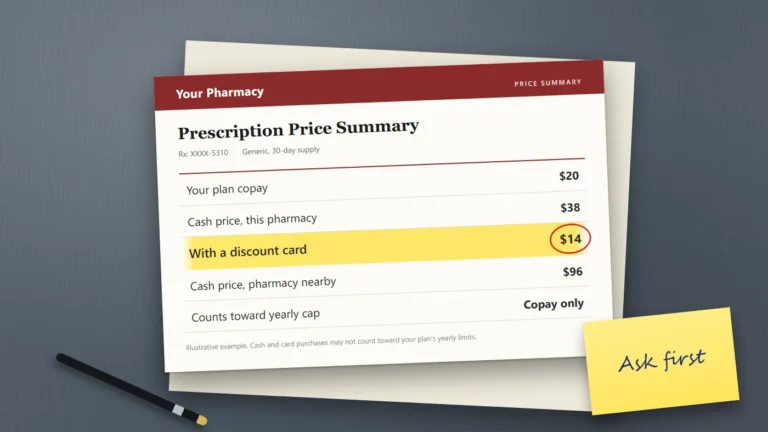
Discount cards. For some drugs, mostly generics, a card's cash price beats your plan's copay. You can't use a card and Part D on the same fill, and cash spent outside the plan usually doesn't count toward your deductible or the $2,400 cap. For the 15 brand-name drugs here, Part D will usually be the cheaper route in 2027.
Mistakes that cost money this fall
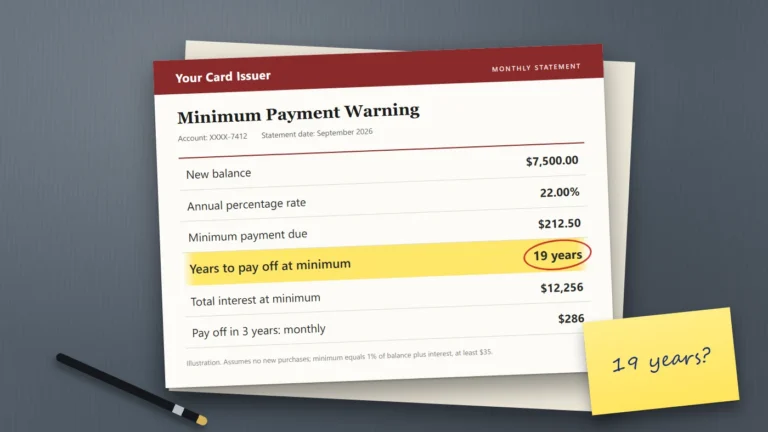
- Treating $274 as your copay. That's what the plan pays. Your share could be $69, $47 or the full $274, depending on the plan and on where you are with the deductible.
- Letting the plan renew unread. Do nothing and you stay put under the plan's 2027 terms. That can be fine. Read the notice first.
- Picking by premium. A plan that's $15 a month cheaper can cost hundreds more over the year if it puts your drug on a higher tier.
- Waiting until December. Plan Finder and the phone lines get crowded in the final week.
The prices are locked in. How much of the cut reaches you isn't, and that's decided by whichever plan you're in on January 1. Set your Annual Notice of Change next to your prescription bottles this week, find the tier for each drug, and you'll have until December 7 to act on it.
This article is general information, not financial, legal, tax or medical advice.