
Flood Insurance Premiums Keep Rising Under Risk Rating 2.0: What Homeowners Can Do
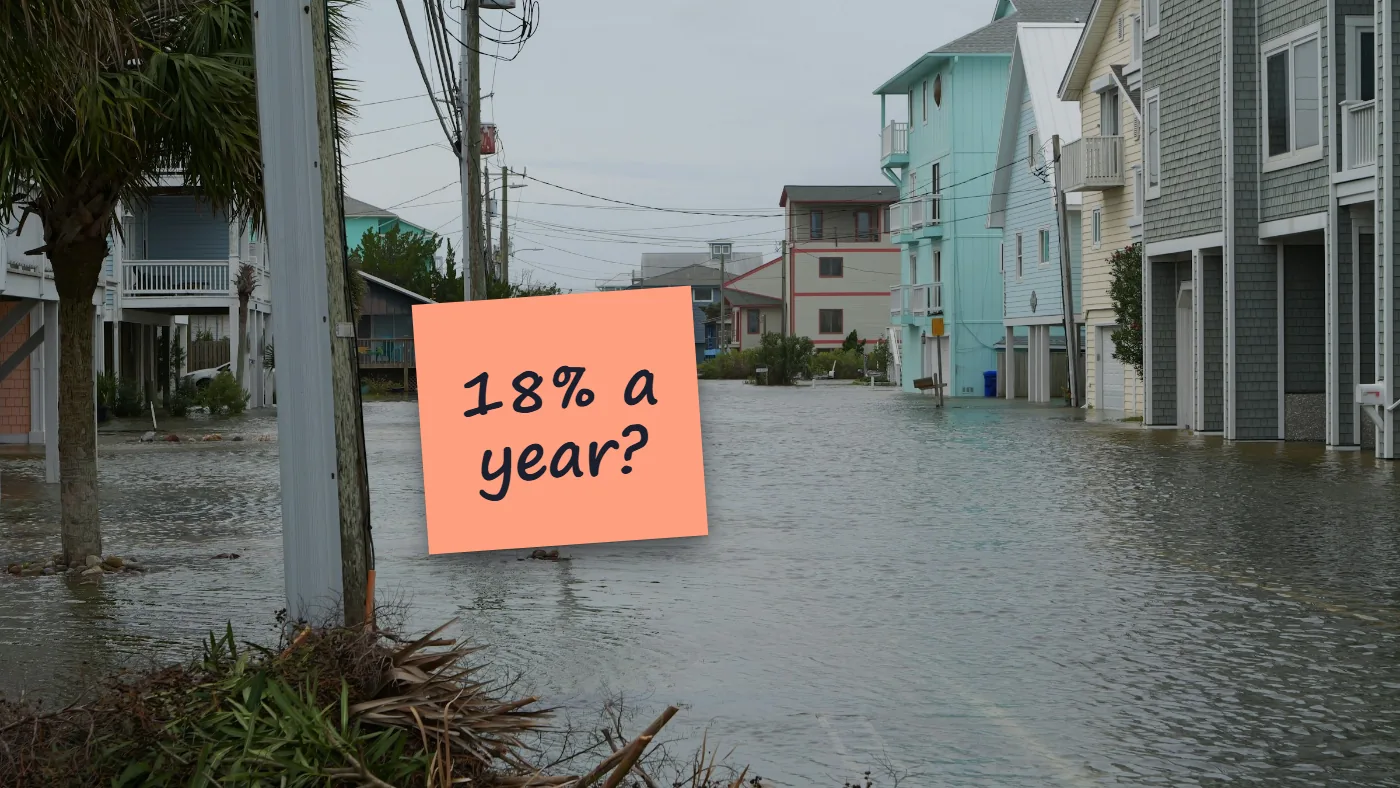
Same house, no claim, and the flood renewal came in higher again. Under Risk Rating 2.0, FEMA has worked out a full-risk price for each building, and most premiums climb toward it in capped steps at every renewal. For some policies, the total climb runs past 300%, by the Government Accountability Office's count. Your own finish line is a number most owners never see, and parts of it can still move.
Also worth reading
 Insurance
Your home insurance rose with no claims. Check these four lines.
 Home & Mortgage
Your fixed-rate payment has two parts that are not fixed at all
Insurance
Your home insurance rose with no claims. Check these four lines.
Home & Mortgage
Your fixed-rate payment has two parts that are not fixed at all
 Insurance
Your home claim was denied. Find the "Suit Against Us" date first.
 Home & Mortgage
Your condo board sent a special assessment. Check these records first
 Taxes
Your home's gain may top the $250,000 exclusion. Check your basis first
 Debt & Credit
Your house is paid off. Check who the county says owns it
 Insurance
Your nonrenewal letter has two dates. Count the days between them
 Home & Mortgage
Your property tax bill has an exemptions line. Read it tonight
 Medicare
You can leave Medigap any fall. Coming back is a different story
 Medicare
Your 2027 raise is 3.6%. See what Part B leaves
 Medicare
Your Medicare plan can change January 1. Seven checks, in order
 Medicare
Your state may pay your Part B premium. Check one income line
 Medicare
Your plan said no. Most appeals filed were at least partly reversed
 Medicare
If your Medicare Advantage plan ends, you get a 63-day Medigap right
 Insurance
Your 2027 subsidy stops at $63,840. Here's how the line is drawn
 Medicare
Your Plan G premium jumped again. Check your state's switching window
 Debt & Credit
The one question to ask when a grandchild calls needing money
 Insurance
Your spouse goes on Medicare. You're 62. Where your coverage comes from
 Insurance
The adjuster wants to record your call. What you can say
 Medicare
Your Part D deductible can reach $700 in January. Check this line
 Home & Mortgage
This winter's heating bill forecast: gas down 9%, oil up 21%
 Home & Mortgage
Divide your electric bill by the kilowatt-hours. Compare it with last year
 Insurance
Your renewal letter shows the new premium, not which rating factor changed
 Retirement
Your parent's bank won't take the power of attorney. Check one rule
 Insurance
Your totaled car's value comes from a report you can request
 Medicare
COBRA does not count as employer coverage when you turn 65
 Retirement
You're the executor. Which of your parent's bills come first
 Insurance
Hit a deer? Your comprehensive coverage, not collision, usually pays
 Home & Mortgage
Your home warranty may pay $3,000 toward a $7,500 system
 Medicare
Your plan's September letter has five lines that set your 2027 costs
 Home & Mortgage
A HELOC payment changes twice. Plan for the second one before signing
 Debt & Credit
A collector can't take your Social Security. The IRS sometimes can
 Debt & Credit
Your repair quote vs. a car payment. Run this math first
 Debt & Credit
The timeshare exit that starts with a free phone call to the developer
 Retirement
At 62 your Social Security check is 30% smaller, for life
 Insurance
A woman's $10,000 burial policy costs $33 at 60, $98 at 80
 Retirement
Your will still goes through probate court. A living trust doesn't
 Medicare
Your parent was "under observation," not admitted. That changes who pays rehab
 Debt & Credit
Your card statement has a box showing the 36-month payoff amount
 Medicare
Your 2026 Medicare premium was set by your 2024 tax return
 Home & Mortgage
Your tax basis in an inherited house is its date-of-death value
 Insurance
Your "extended warranty" is not a warranty, and the FTC says so
 Retirement
Your first IRA withdrawal deadline is April 1, and it has a catch
 Debt & Credit
Your parent's final hospital bill came to you. Usually it's the estate's
 Insurance
Your long-term care premium went up. Compare the options in the letter
 Insurance
Your roof claim may now be paid at actual cash value
 Home & Mortgage
Twelve months in a nursing home can make your reverse mortgage due
 Medicare
Your Medigap plan pays 80% abroad, up to a $50,000 lifetime cap
 Debt & Credit
The $167 a month you pay for a car you traded away
 Debt & Credit
Your car was repossessed. What the lender can still collect
 Insurance
The same term life policy costs double at 65 versus 55
 Insurance
Your term policy's conversion deadline may come before the term ends
 Retirement
What $100,000 buys you in monthly income at 65: about $625
 Taxes
What to say when you call the number on your penalty notice
 Debt & Credit
Why December had the biggest incentives and the highest prices
 Debt & Credit
Find the "Itemization of Amount Financed" box on your car loan contract
 Debt & Credit
Your car loan had a second interest rate you never saw
 Insurance
Your insurer must name the credit bureau it used to price you
 Insurance
Your insurer still thinks you drive to work five days a week
 Debt & Credit
A collector cannot sue you on a debt past its legal deadline
 Insurance
Multiply two lines on your car policy by 10 before you renew
 Taxes
Your Social Security is still taxable. The new $6,000 deduction explains why
 Retirement
Your old 401(k) may be in an IRA you never opened
 Home & Mortgage
Your PMI can end at 75% of today's home value
 Insurance
You can request the driving file a data broker keeps on you
 Insurance
Before you drop a life insurance policy, ask what a buyer pays
 Taxes
The plant code in your VIN now matters at tax time
 Retirement
Your overpayment letter starts a clock. One form can pause the withholding
 Retirement
Your check after 2032: taxes still cover 78%. See the math
 Retirement
You care for your mom daily. Three programs can pay family caregivers
 Debt & Credit
You signed as 'responsible party.' Read what that line commits you to
 Retirement
Your parent's IRA came with a 10-year clock, and yearly withdrawals
 Insurance
Your dad shouldn't be driving. What his insurance and the law say
 Debt & Credit
Your car loan is paid off. The title still hasn't come
 Insurance
Your MRI price depends on where you get it. Check before booking
 Retirement
Your Medicare nursing home coverage ends on day 101. Then what
 Medicare
Your Part D plan's Ozempic price is based on $274 starting January
 Medicare
Your Medicare Advantage dental benefit probably stops near $1,300 a year
 Retirement
You deeded the house to your kids. Medicaid still checks 60 months
 Retirement
Your disability denial letter starts a 60-day clock
 Insurance
Your implant quote may leave out the scan and the bone graft
 Medicare
Your copay can be higher than the pharmacy's cash price
 Home & Mortgage
Your stairlift quote may be $7,000. Medicare's share is zero.
 Medicare
Your $4,000 hearing aid quote bundles years of office visits
 Medicare
The $959 drug Medicare will pay $274 for starting January 1
 Insurance
Your medical alert bill can double once fall detection is added
 Medicare
Your cataract surgery bill has two parts. Medicare pays only one
 Debt & Credit
Your hospital bill has a financial assistance line. It's near the bottom
 Debt & Credit
Your paid medical bill shouldn't be on your credit report anymore
 Debt & Credit
Your hospital bill is one line. You can ask for every charge
 Debt & Credit
Your ambulance ride isn't covered by the federal surprise billing law
By law, most of these premiums can rise up to 18% a year until they get there. That sounds gentle. Look at the dollars instead, though, and the jumps get bigger every renewal while the percentage stays put. Many second homes are on a faster track.
Being a loyal customer won't stop the increases, and neither will a quiet year. The add-on fees ride on top of the premium, too. And shopping one federal flood agent against another won't change the price, since every insurer selling it charges the same premium.
Before the next flood renewal
The premium is one line on the bill. A few other pieces shape what you actually pay each month, and you can check them from the kitchen table.
- The charges on top. Most homeowners pay three add-ons outside the premium: a reserve fund assessment, a surcharge and a federal policy fee. Picture a $1,000 premium. Those three put another $252 on it.
- The escrow account. If your lender collects the flood premium with the mortgage, the increase tends to show up after the servicer's annual escrow analysis, sometimes with a shortage added in.
- The zone letter on the map. These days it mostly decides whether a lender requires flood coverage, not what it costs. Two houses close together may be rated quite differently.
- Your building coverage. On a loan that's nearly paid off, the lender's minimum can sit far below what a rebuild would run. That number is the lender's floor. It isn't advice.
All four sit around the premium. Inside it are the building details FEMA rates, and an owner can still question some of them.
Also on this topic
Insurance
Your home claim was denied. Find the "Suit Against Us" date first.
Home & Mortgage
Your condo board sent a special assessment. Check these records first
Taxes
Your home's gain may top the $250,000 exclusion. Check your basis first
Debt & Credit
Your house is paid off. Check who the county says owns it
Insurance
Your nonrenewal letter has two dates. Count the days between them
Home & Mortgage
Your property tax bill has an exemptions line. Read it tonight
Insurance
Your home insurance rose with no claims. Check these four lines.
Home & Mortgage
Your fixed-rate payment has two parts that are not fixed at all
Insurance
Your home claim was denied. Find the "Suit Against Us" date first.
Home & Mortgage
Your condo board sent a special assessment. Check these records first
Taxes
Your home's gain may top the $250,000 exclusion. Check your basis first
Debt & Credit
Your house is paid off. Check who the county says owns it
Insurance
Your nonrenewal letter has two dates. Count the days between them
Home & Mortgage
Your property tax bill has an exemptions line. Read it tonight
Medicare
You can leave Medigap any fall. Coming back is a different story
Medicare
Your 2027 raise is 3.6%. See what Part B leaves
Medicare
Your Medicare plan can change January 1. Seven checks, in order
Medicare
Your state may pay your Part B premium. Check one income line
Medicare
Your plan said no. Most appeals filed were at least partly reversed
Medicare
If your Medicare Advantage plan ends, you get a 63-day Medigap right
Insurance
Your 2027 subsidy stops at $63,840. Here's how the line is drawn
Medicare
Your Plan G premium jumped again. Check your state's switching window
Debt & Credit
The one question to ask when a grandchild calls needing money
Insurance
Your spouse goes on Medicare. You're 62. Where your coverage comes from
Insurance
The adjuster wants to record your call. What you can say
Medicare
Your Part D deductible can reach $700 in January. Check this line
Home & Mortgage
This winter's heating bill forecast: gas down 9%, oil up 21%
Home & Mortgage
Divide your electric bill by the kilowatt-hours. Compare it with last year
Insurance
Your renewal letter shows the new premium, not which rating factor changed
Retirement
Your parent's bank won't take the power of attorney. Check one rule
Insurance
Your totaled car's value comes from a report you can request
Medicare
COBRA does not count as employer coverage when you turn 65
Retirement
You're the executor. Which of your parent's bills come first
Insurance
Hit a deer? Your comprehensive coverage, not collision, usually pays
Home & Mortgage
Your home warranty may pay $3,000 toward a $7,500 system
Medicare
Your plan's September letter has five lines that set your 2027 costs
Home & Mortgage
A HELOC payment changes twice. Plan for the second one before signing
Debt & Credit
A collector can't take your Social Security. The IRS sometimes can
Debt & Credit
Your repair quote vs. a car payment. Run this math first
Debt & Credit
The timeshare exit that starts with a free phone call to the developer
Retirement
At 62 your Social Security check is 30% smaller, for life
Insurance
A woman's $10,000 burial policy costs $33 at 60, $98 at 80
Retirement
Your will still goes through probate court. A living trust doesn't
Medicare
Your parent was "under observation," not admitted. That changes who pays rehab
Debt & Credit
Your card statement has a box showing the 36-month payoff amount
Medicare
Your 2026 Medicare premium was set by your 2024 tax return
Home & Mortgage
Your tax basis in an inherited house is its date-of-death value
Insurance
Your "extended warranty" is not a warranty, and the FTC says so
Retirement
Your first IRA withdrawal deadline is April 1, and it has a catch
Debt & Credit
Your parent's final hospital bill came to you. Usually it's the estate's
Insurance
Your long-term care premium went up. Compare the options in the letter
Insurance
Your roof claim may now be paid at actual cash value
Home & Mortgage
Twelve months in a nursing home can make your reverse mortgage due
Medicare
Your Medigap plan pays 80% abroad, up to a $50,000 lifetime cap
Debt & Credit
The $167 a month you pay for a car you traded away
Debt & Credit
Your car was repossessed. What the lender can still collect
Insurance
The same term life policy costs double at 65 versus 55
Insurance
Your term policy's conversion deadline may come before the term ends
Retirement
What $100,000 buys you in monthly income at 65: about $625
Taxes
What to say when you call the number on your penalty notice
Debt & Credit
Why December had the biggest incentives and the highest prices
Debt & Credit
Find the "Itemization of Amount Financed" box on your car loan contract
Debt & Credit
Your car loan had a second interest rate you never saw
Insurance
Your insurer must name the credit bureau it used to price you
Insurance
Your insurer still thinks you drive to work five days a week
Debt & Credit
A collector cannot sue you on a debt past its legal deadline
Insurance
Multiply two lines on your car policy by 10 before you renew
Taxes
Your Social Security is still taxable. The new $6,000 deduction explains why
Retirement
Your old 401(k) may be in an IRA you never opened
Home & Mortgage
Your PMI can end at 75% of today's home value
Insurance
You can request the driving file a data broker keeps on you
Insurance
Before you drop a life insurance policy, ask what a buyer pays
Taxes
The plant code in your VIN now matters at tax time
Retirement
Your overpayment letter starts a clock. One form can pause the withholding
Retirement
Your check after 2032: taxes still cover 78%. See the math
Retirement
You care for your mom daily. Three programs can pay family caregivers
Debt & Credit
You signed as 'responsible party.' Read what that line commits you to
Retirement
Your parent's IRA came with a 10-year clock, and yearly withdrawals
Insurance
Your dad shouldn't be driving. What his insurance and the law say
Debt & Credit
Your car loan is paid off. The title still hasn't come
Insurance
Your MRI price depends on where you get it. Check before booking
Retirement
Your Medicare nursing home coverage ends on day 101. Then what
Medicare
Your Part D plan's Ozempic price is based on $274 starting January
Medicare
Your Medicare Advantage dental benefit probably stops near $1,300 a year
Retirement
You deeded the house to your kids. Medicaid still checks 60 months
Retirement
Your disability denial letter starts a 60-day clock
Insurance
Your implant quote may leave out the scan and the bone graft
Medicare
Your copay can be higher than the pharmacy's cash price
Home & Mortgage
Your stairlift quote may be $7,000. Medicare's share is zero.
Medicare
Your $4,000 hearing aid quote bundles years of office visits
Medicare
The $959 drug Medicare will pay $274 for starting January 1
Insurance
Your medical alert bill can double once fall detection is added
Medicare
Your cataract surgery bill has two parts. Medicare pays only one
Debt & Credit
Your hospital bill has a financial assistance line. It's near the bottom
Debt & Credit
Your paid medical bill shouldn't be on your credit report anymore
Debt & Credit
Your hospital bill is one line. You can ask for every charge
Debt & Credit
Your ambulance ride isn't covered by the federal surprise billing law